|
|||
|
|||
|
|||
You received this e-mail because of your membership or affiliation with ASHA. If you have a technical issue, please send an e-mail to listadmin@asha.org. If you would prefer not to receive product-promotion-related e-mails from ASHA, please send an e-mail to unsubscribe-products@asha.org. By unsubscribing, you will be removed from ASHA’s list for future product-promotion-related e-mails. Please note that you will continue to receive other e-mails related to your membership. |
 American Speech-Language- Hearing Association www.asha.org 2200 Research Blvd Rockville, MD 20850
©
Copyright 2012
|
||

Monday, July 16, 2012
Save 10% on Medical AAC CEU (Audio Program) from ASHA


Minspeak E-Newsletter, Issue 53
|
||||||||||||||||||||||||


Sunday, July 15, 2012
iPad Apps for Communication: Pinterest
Micky Ashley has put together this Pinterest pin board with sweetly succinct descriptions of 118 AAC apps for the iPad with prices.

Friday, July 13, 2012
Apple Lineup To Become More Disability Friendly
 The iPhone and iPad will soon be even simpler to use
for people with a wide range of disabilities thanks to a new software
update, Apple Inc. officials said this week.
Changes designed to make the popular mobile devices more accessible are expected in a forthcoming update to Apple’s iOS software, the operating system that powers the iPhone, iPad and iPod touch.
A new feature called “Guided Access” will be especially beneficial for students with disabilities like autism, Apple representatives said, by helping users to “remain on task and focused on content.” The offering allows parents and educators to limit access on a device to one specific app by essentially turning off the “home” button and restricting areas of the touch screen that respond to commands.
“We’ve been surprised by the number of children with autism who’ve been flocking to our devices, especially our iPads, and we want to make that experience even better,” said Scott Forstall, the Apple executive responsible for the new software, in announcing Guided Access. “It allows children with autism to learn independently on their iPad.”
In addition, the new software will include added screen reader functions to allow those with vision impairments improved access to maps and other features.
Apple’s devices have long been regarded as ahead of the curve in terms of disability access. But in unveiling the new software Monday at the tech-giant’s Worldwide Developers Conference in San Francisco, company officials are becoming increasingly overt in their emphasis on the disability market.
Accessibility was highlighted as one of 10 key areas that will see improvements in the new mobile operating system alongside hallmarks like phone, email and Web browsing functionalities.
The new software known as iOS 6 is expected to be available this fall as a free download for the iPhone 4S, iPhone 4, iPhone 3GS, the new iPad, iPad 2 and iPod touch (fourth generation).
From FCTD: Autism and the iPad
The Family Center on Technology and Disability featured uses of the iPad with persons who have autism (not specific to AAC) in their May 2012 Technology Voices newsletter.

The FCTD web site (www.fctd.info) provides thousands of assistive and instructional technology resources of interest to families of children with disabilities. The website offers access to fact sheets, Power Point presentations, monthly newsletters, online discussion and summer institute transcripts, a database of more than 3,500 organizations, a resource review database with hundreds of reviews of AT resources and more.
Download the newsletter by clicking HERE. Visit the FCTD website HERE.
Thursday, July 12, 2012
SCAAC-N Summer Quarterly Meeting, July 24, 6:30 (Pasadena)
On Tuesday, July 24, Darlene Hanson and Rebecca Liu will be speaking with the Southern California AAC Network on how Augmentative Communication and Assistive Technology
can support a full inclusion experience. Join us at Villa Esperanza Services in Pasadena!
Rebecca is now a high school
student, in Pasadena, who has minimal use of her speech. She has been
using low tech and high tech systems for all of her education. We will
talk about the progressions, the support, and variety of systems that
have accommodated her, and others, to participate in the school
experience and to grow in the area of communication.

Darlene Hanson has been a Speech and Language Pathologist for 20 years, working
with individuals with severe communication impairments. Her expertise
in working with individuals who are “non verbal” and use alternate modes
of communication, as well as in the area of speech development for
persons with severe motor apraxia as it relates to autism. She worked in
the public school setting as a school based clinician and program
specialist, taught university level courses at Chapman University.
Participation is FREE! as always. Bring a colleague.
Location: Villa Esperanza Services Conference Room
Location: Villa Esperanza Services Conference Room
2116 E. Villa Street, Pasadena, CA
Time: Tuesday, July 24, 2012
6:30-6:45 Networking
6:45-8:00 Presentation
For more information, write socalaacnetwork@gmail.com
Mind-reading program translates brain activity into words
(Many thanks, again, to Sharon Rogers for sharing this article!)
The research paves the way for brain implants that would translate the thoughts of people who have lost power of speech.
Algorithms translated the brain activity associated with hearing
'Waldo', 'structure', 'doubt' and 'property' into recognisable words. LINK to Video: PLoS Biology
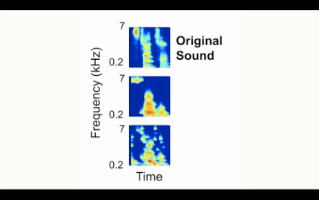
Experiments on 15 patients in the US showed that a computer could decipher their brain activity and play back words they heard, though at times the words were difficult to recognise. "This is exciting in terms of the basic science of how the brain decodes what we hear," said Robert Knight, a senior member of the team and director of the Helen Wills Neuroscience Institute at the University of California, Berkeley.
"Potentially, the technique could be used to develop an implantable prosthetic device to aid speaking, and for some patients that would be wonderful. The next step is to test whether we can decode a word when a person imagines it. That might sound spooky, but this could really help patients. Perhaps in 10 years it will be as common as grandmother getting a new hip," Knight said. The study is published in the journal PLoS Biology.
The scientists ran tests on patients who were already in hospital for an operation to treat intractable epilepsy. In that procedure, patients have the top of their skull removed and a net of electrodes laid across the surface of their brain. Doctors use the electrodes to identify the precise trigger point of the patient's fit, before removing the tissue. Sometimes, patients wait for days before they have enough seizures to locate the source of the problem.
Scientist Brian Pasley enrolled 15 patients to take part. He played each a series of words for five to 10 minutes while recording their brain activity from the electrode nets. He then created computer programs that could recognise sounds encoded in the brain waves.
The brain seems to break sounds down into their constituent acoustic frequencies. The most important range for speech is 1-8,000 Hertz. Pasley compared the technique to a pianist who can hear a piece in their mind just by knowing which keys are played. He next played a collection of new words to the patients to see if the algorithms could pick out and repeat recognisable words. Among them were words such as "Waldo", "structure", "doubt" and "property".
The scientists got their best results when they recorded activity in the superior temporal gyrus, part of the brain that sits to one side, above the ear. "I didn't think it could possibly work, but Brian did it," said Knight. "His model can reproduce the sound the patient heard and you can actually recognise the word, though not at a perfect level."
The prospect of reading minds has led to ethical concerns that the technology could be used covertly or to interrogate criminals and terrorists. Knight said that is in the realm of science fiction. "To reproduce what we did, you would have to open up someone's skull and they would have to co-operate." Making a device to help people speak will not be easy. Brain signals that encode imagined words could be harder to decipher and the device must be small and operate wirelessly. Another potential headache is distinguishing between words a person wants to say and thoughts they would rather keep private.
Jan Schnupp, professor of neuroscience at Oxford University called the work "remarkable".
"Neuroscientists have long believed that the brain works by translating aspects of the external world, such as spoken words, into patterns of electrical activity. But proving that this is true by showing that it is possible to translate these activity patterns back into the original sound – or at least a fair approximation – is nevertheless a great step forward. It paves the way to rapid progress toward biomedical applications," he said.
"Some may worry though that this sort of technology might lead to mind-reading devices which could one day be used to eavesdrop on the privacy of our thoughts. Such worries are unjustified. It is worth remembering that these scientists could only get their technique to work because epileptic patients had cooperated closely and willingly with them, and allowed a large array of electrodes to be placed directly on the surface of their brains.
"We can rest assured that our skulls will remain an impenetrable barrier for any would-be technological mind hacker for any foreseeable future," he added.
Subscribe to:
Posts (Atom)