|
||||||||||||||||||||||||

Thursday, August 30, 2012
Minspeak E-Newsletter, Issue 56


Tuesday, August 28, 2012
ProLoQuo2Go Back-to-School Tips

Follow Proloquo2Go on Facebook (CLICK HERE) for tips like these and more!
1st Tip: How to submit a request for assistance. You can go to this link: https://support.assistiveware.com/index.php?pg=request or email support@proloquo2go.com
2nd Tip: New video! In this 9-minute video demonstration (CLICK HERE), Nate will tour the two new Proloquo2Go 2 vocabularies: Core Word designed for users who are able to put 2 or more words together to make sentences and the Basic Communication vocabulary designed for those who are just beginning to use AAC to express their basic needs.
Monday, August 27, 2012
Grad Course Curriculum: AAC in Autism
In her preparation of curriculum for a 7-week, graduate level course on AAC, Tami Brancamp, Ph.D. (Univ. of Nevada, Reno) asked the ASHA Community SIG 12 for input on the content of her course. I couldn't resist! and would like to share my personal soap box shpeal with you, too...
(From Gwendolyn Meier, Pasadena, CA)
I hope that you will dedicate at least one class session entirely to AAC in autism. I recognize two primary issues that are of great importance when teaching nonverbal and minimally verbal folks with autism to use AAC: 1) expanding pragmatic functions right from the start, and 2) de-emphasizing symbol recognition and association in exchange for emphasis on motor patterns for expressive communication.

It is my experience that much graduate instruction as well as continuing education courses focus on providing AAC to persons with intact social communication desires (i.e., disabling conditions other than ASD). In autism, as I'm sure you have also experienced, early pragmatic functions of communication are restricted by the lack of intrinsic motivation to communicate socially. In addition to teaching learners to make requests and to protest using AAC, I find that even at the 1-word/hit language stage, the functions of commenting, interjecting and sharing opinions can be very powerful when sufficiently modeled in motivating interactive contexts. Some examples of content follow:

In addition to this content, I think it is important to emphasize that when teaching learners who have complex communication needs, with our without autism, receptive symbol recognition should not be considered prerequisite to the teaching of expressive language concepts through modeling in meaningful interaction. In the teaching process, consistent location of motivating vocabulary can reduce the learner's reliance on visual recognition, symbol iconicity and metaphoric association - particularly learners with autism. Learners don't need to be able to recognize/"point to"/"give" a symbol that is named before they can use that symbol to get something done in the world. This concept may seem counter-intuitive to some, but is supported by the fact that nonverbal individuals with autism and related disorders have inherent challenges in abstract association of meaning and, in general, their motor systems are relatively more intact than their conceptual and linguistic systems.
Picture communication books or other Velcro-based displays often lack a consistent placement of vocabulary from one use to another, which can put a strain on the cognitive demand of communicating any particular message. If clinicians and teachers capitalize on the benefits inherent in consistent motor patterns when creating and maintaining visual displays for communication in different settings or activities, motor learning will reduce the associative demand. In fact, for all learners, motor planning plays an important and often overlooked role...This is not to say that receptive identification of photos, drawings, etc. is not an important skill to teach! It just may be less important than we think when teaching use of a visually-based expressive communication system.
The Center for AAC and Autism's LAMP program (Language Acquisition through Motor Planning) talks more about this. There is also a wealth of practical and well-organized information on the evidence base for speech generating devices in autism at this site:
http://autismpdc.fpg.unc.edu/content/speech-generating-devicesvoca
(From Gwendolyn Meier, Pasadena, CA)
I hope that you will dedicate at least one class session entirely to AAC in autism. I recognize two primary issues that are of great importance when teaching nonverbal and minimally verbal folks with autism to use AAC: 1) expanding pragmatic functions right from the start, and 2) de-emphasizing symbol recognition and association in exchange for emphasis on motor patterns for expressive communication.

It is my experience that much graduate instruction as well as continuing education courses focus on providing AAC to persons with intact social communication desires (i.e., disabling conditions other than ASD). In autism, as I'm sure you have also experienced, early pragmatic functions of communication are restricted by the lack of intrinsic motivation to communicate socially. In addition to teaching learners to make requests and to protest using AAC, I find that even at the 1-word/hit language stage, the functions of commenting, interjecting and sharing opinions can be very powerful when sufficiently modeled in motivating interactive contexts. Some examples of content follow:
Early Non-Verbal Language Stages
1. One word/picture card/button/hit at a time
- Cause-and-effect, One-word/hit requesting (More, Mine, Want, Go, Turn, Open, In, Out, object or action labels)
- Rejecting/Protesting (Stop, No, All done, Break)
- One-hit comments, interjections, sharing opinions, greetings (taught through modeling; Oh man!, Oops, Sorry, Help, Be careful, Funny, I like it, I don't like it, Cool! Hi, Bye)
2. Two- and three-word/picture/button/hit phrases
- Specified requests ("I want" + item/action, "More" + item/action)
- Specified protests ("No" + item/action, "All done" + item/action)
- Directing others' actions using core vocab (Help This, Give Me, I Go, You Go, Put in, Open it, etc.)
3. Building phrases and early sentences (3+ words/hits), moving toward grammar, morphology, etc.....
In addition to this content, I think it is important to emphasize that when teaching learners who have complex communication needs, with our without autism, receptive symbol recognition should not be considered prerequisite to the teaching of expressive language concepts through modeling in meaningful interaction. In the teaching process, consistent location of motivating vocabulary can reduce the learner's reliance on visual recognition, symbol iconicity and metaphoric association - particularly learners with autism. Learners don't need to be able to recognize/"point to"/"give" a symbol that is named before they can use that symbol to get something done in the world. This concept may seem counter-intuitive to some, but is supported by the fact that nonverbal individuals with autism and related disorders have inherent challenges in abstract association of meaning and, in general, their motor systems are relatively more intact than their conceptual and linguistic systems.
Picture communication books or other Velcro-based displays often lack a consistent placement of vocabulary from one use to another, which can put a strain on the cognitive demand of communicating any particular message. If clinicians and teachers capitalize on the benefits inherent in consistent motor patterns when creating and maintaining visual displays for communication in different settings or activities, motor learning will reduce the associative demand. In fact, for all learners, motor planning plays an important and often overlooked role...This is not to say that receptive identification of photos, drawings, etc. is not an important skill to teach! It just may be less important than we think when teaching use of a visually-based expressive communication system.
The Center for AAC and Autism's LAMP program (Language Acquisition through Motor Planning) talks more about this. There is also a wealth of practical and well-organized information on the evidence base for speech generating devices in autism at this site:
Friday, August 24, 2012
PRC CA Coverage Changes

|
|||||||||||||||||||||


Thursday, August 23, 2012
Study opportunity for SLPs: Communication Matrix
|
||||||||||
|
We are seeking Speech-Language Pathologists and Special Education Teachers to participate in a study funded by the U.S. Department of Education. Participants must:
· Currently
serve at least one student with complex communication needs at any
grade level, including early intervention/early childhood special
education.
· Be responsible for developing communication-related IEP/IFSP goals for one student, as described above.
· NOT currently use the Communication Matrix to evaluate students
Participants will receive an honorarium ranging from $200-$350 depending on the group they are assigned to.
Grant #H327A110010
U. S. Dept. of Education
Dr. Charity Rowland, P. I.
IRB #1517
|
Thursday, August 16, 2012
Minspeak E-Newsletter, Issue 55
|
||||||||||||||||||||


Monday, August 13, 2012
Research: Online Training for Paraeducators...[in AAC]
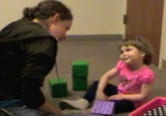
Douglas, S., Light, J., & McNaughton, D. (July, 2012). Online
Training for Paraeducators to Support the Communication of Young
Children with Complex Communication Needs. Presentation at 15th
Biennial Conference of the International Society for Augmentative and
Alternative Communication (ISAAC) in Pittsburgh, PA....
...This research project examined the effect of online training for
paraeducators to support the communication of young children with CCN
during play and generalization activities. The content of training was
driven by research in early childhood development and communication and
based on research in the area of communication partners as summarized by
Light and Drager (2010). During the online training paraeducators were
taught the three steps of the PoWR strategy.
1) Provide opportunities for communication
- included teaching paraeducators to provide multiple communication opportunities to their target child by asking questions, commenting about the activity, and providing choices (Fox et al., 1997).
2) Wait for child’s communication
- paraeducators learned to wait for at least five seconds after offering a communication opportunity so the child had adequate time to respond (Downing, 2005; Klein, Cook, & Richardson-Gibbs, 2001; Otto, 2010).
3) Respond to child’s communication
- taught paraeducators to respond when the child communicates, even if the communication is unclear (Allen & Hart, 1984; Cress & Marvin, 2003; Snell, 2002; Snyder & Sheehan, 1996; Zangari & Kangas, 1997). If the child did not communicate after five seconds, the paraeducator was taught to provide another opportunity for communication....
(read the entire article HERE)
1) Provide opportunities for communication
- included teaching paraeducators to provide multiple communication opportunities to their target child by asking questions, commenting about the activity, and providing choices (Fox et al., 1997).
2) Wait for child’s communication
- paraeducators learned to wait for at least five seconds after offering a communication opportunity so the child had adequate time to respond (Downing, 2005; Klein, Cook, & Richardson-Gibbs, 2001; Otto, 2010).
3) Respond to child’s communication
- taught paraeducators to respond when the child communicates, even if the communication is unclear (Allen & Hart, 1984; Cress & Marvin, 2003; Snell, 2002; Snyder & Sheehan, 1996; Zangari & Kangas, 1997). If the child did not communicate after five seconds, the paraeducator was taught to provide another opportunity for communication....
(read the entire article HERE)
Subscribe to:
Posts (Atom)